

A Reflection: On Labor Day
What this holiday signifies for me

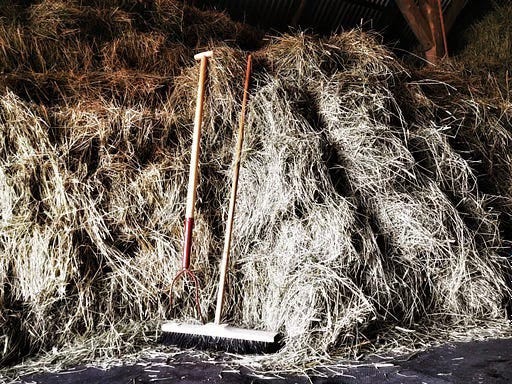
As Labor Day weekend approaches, we’re reminded that this holiday honors the labor movement and its contributions to our nation’s strength, prosperity, and well-being. You could also say that it’s a day that celebrates sacrifice and the value of hard work. Culturally, this day signifies for many the end of summer and a transition to a new season. Change is palpable. The air is crisper, days shorter, and shadows longer.
For me, the day serves as a personal transition and time of change. A reminder of the choices I’ve made and the paths I’ve followed. It was on this day in 1960, at the age of seven, that I became, quite literally, part of the labor force, working not for the good of a nation but for a father harboring a dream—to build a boat and sail the ocean.
We’d execute this dream, laboring for a decade, starting with cleaning out an old barn in the vineyards of Livermore, California.
This pivotal moment would set the trajectory of my life in motion.
Labor Day 1960
“I expect you girls to be team players,” my father said, handing my sisters and me rakes and instructing us to gather up the loose hay on the barn floor while he and my mother threw bales down from the barn’s loft.
I stood inside the barn’s cavernous space, holding my rake and watching the pile of hay grow, a reminder that, like the princess in Rumpelstiltskin, my job was to help turn it into gold. To do that, I had to gather every last straw.
I learned to obey orders.
While Mickey, the ancient horse who shared an adjacent stall, munched on oats, my sisters and I raked. All day long, we worked, and still more hay needed to be moved. Only the sounds of our rakes scraping along the floorboards, our constant coughing from the dust, and my father’s grunting as he swung the bales to the barn floor broke the silence. A throbbing pain settled between my shoulder blades, but I kept raking. I was a team player.
I participated as a team player.
I looked over at my older sister, who appeared as tired as I was, and my younger sister, who, after picking up a few small fistfuls of hay from the barn floor and depositing them into the wheelbarrow, soon lost interest and retired to the back seat of the car with her dolls and blanket. Although I resented my younger sister’s status as the baby, I didn’t dare complain to my father, who worked at a feverish pace, never slowing down or taking a break. Even my easy-going mother tried to keep pace with him, her face streaked with dirt and dust as she wrestled with the tightly packed bales.
I absorbed my father’s work ethic.
Everything that crawled or slithered had made its home in the bales, and as my parents pulled each straw bundle down, creatures scattered and slid around our feet. A pair of gray field mice shot past us as if the barn cats were in hot pursuit. Flicking away flies with his tail, Mickey observed the chaos erupting on the other side of his stall.
I learned to write by observing.
“A rattlesnake!” my older sister screamed. My father leapt off the pyramid of bales, pitchfork in hand, and landed in a crouched stance on the barn’s wide-planked floor.
“Where? Where?”
“There!” She pointed at the foot-long, skinny black creature slithering toward Mickey’s stall.
I acquired a lifelong aversion to reptiles.
“Aw, that’s just a harmless garter snake,” my father snorted. “Keep raking and you won’t have time to worry about them.” He climbed back up to the loft and resumed throwing the bales over the side. While we kept a lookout for further movement, we were unaware of the activity above us. High in the rafters, thick silken hammocks swung overhead, holding thousands of snoozing black widow spiders and their mummified meals.
I married an expert arachnid disposer.
Through thousands of hours of hard labor, I watched our ship rise to the rafters. A decade from the day our family cleaned the barn, we’d sail under San Francisco’s Golden Gate Bridge to ports unknown.
What transpired during the next two years, sailing the seas, would set the course for the rest of my life. I wrote a book fifty years later to figure it all out.
As Labor Day approaches, I wonder how my life might have turned out if our family had chosen to do something else on that day. A family trip, a picnic, a day at the beach, or just hanging out with my friends.
Instead, I learned that hard work can be both rewarding and, at times, backbreaking.
Labor Day was created in the late 19th century to honor the workers who, at the time, were fighting for better and safer working conditions.
Americans have developed an aversion to labor, leaving millions of migrant workers to toil under unacceptable conditions in our nation’s fields and meat-packing plants.
While I can muse over different scenarios I might have lived, some have no other choice but to labor. These are the workers who embody the definition of this holiday.
I’m glad I know the value of hard work. If you’ve never gotten your hands dirty, you have not acquired empathy. And empathy is what keeps our nation strong, prosperous, and healthy.
Happy Labor Day.
Lovely writing as always JR, thank you…
Labor, Labor & Labor…..
Sick and tired of it ! -
Happy Labour Day to you all, it’s not happy for me at all…